Biography & About
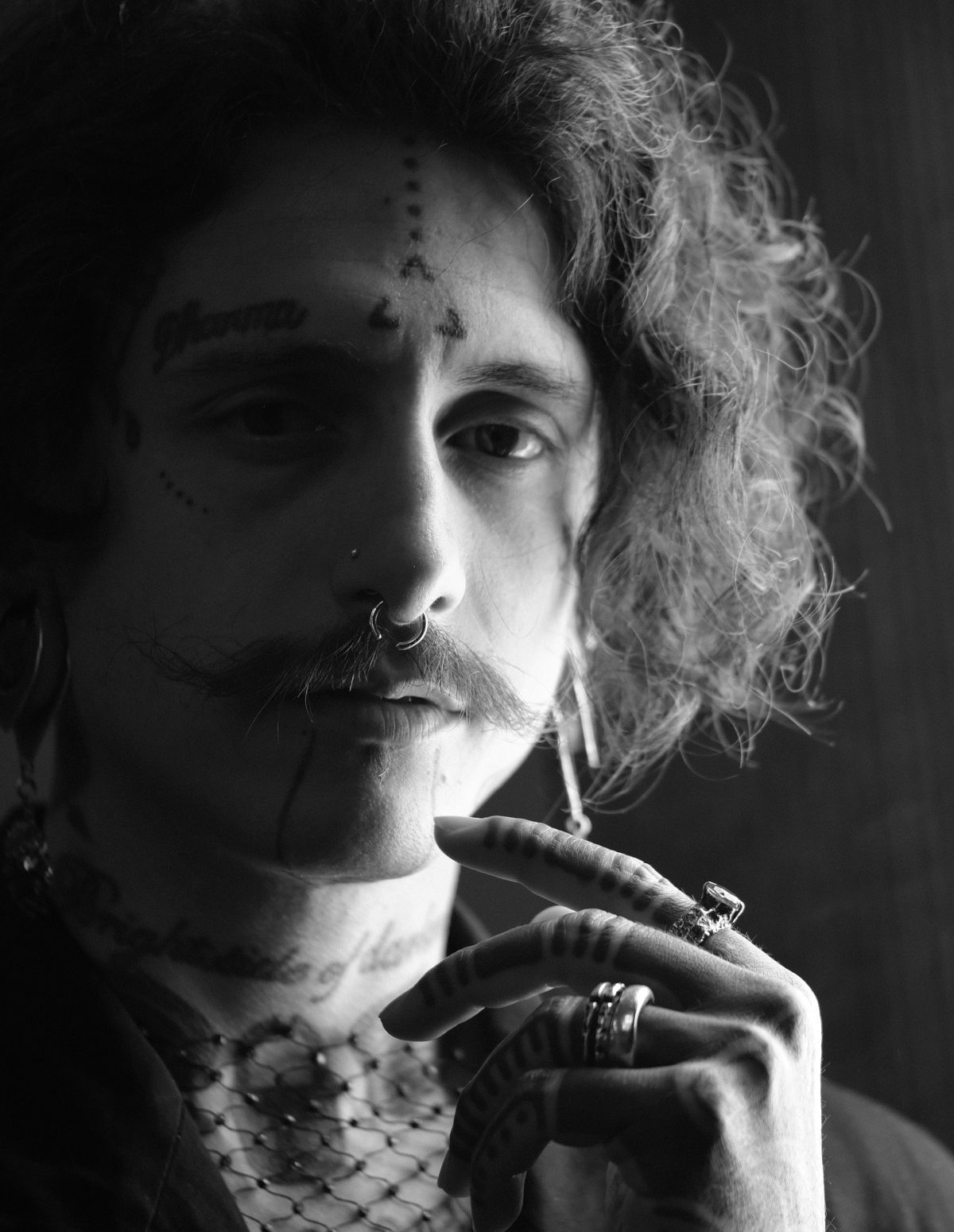
Augusto Talpalar (Argentine, based in Berlin) is an Allegorist Photographer whose practice is a powerful synthesis of global experience and philosophical command. Born into Latin culture and raised in Europe, his unique approach was profoundly refined by extensive travel and periods of living in Southeast Asia—a journey that developed his distinctive vision, aesthetic, and understanding of spirituality.
Rooted in his studies in architecture, interior design, and the plastic arts, this cross-disciplinary foundation instills the visual discipline he applies to every captured scene. Drawing inspiration from both Western and Japanese street photography traditions, Talpalar employs an almost exclusive black-and-white aesthetic to create arresting compositions. He approaches the world as a canvas, capturing its fleeting rhythms, gestures, and subtle narratives with a reflective eye.
His photography translates the complexity of human connection and the subtle order beneath modern life into powerful visual inquiries. Whether wandering city streets or documenting the transformative power of everyday moments, Augusto’s images invite viewers to see the extraordinary in the ordinary. His work is recognized for its existential gravitas and meticulous formal execution, establishing him as a compelling voice in the contemporary arts dialogue.
— Clara Voss, Culture and Image Contributor
Philosophy
Augusto Talpalar is an Allegorist Photographer operating as a crucial bridge between philosophy, psychology, and the photographic medium itself. His work fundamentally challenges the conceptual limits of the art form by demanding that the resulting image function not merely as representation, but as a structural confrontation. The photograph is consciously designed as a dialectical stage where the internal world (psychic distress, desire) and the external construct (architecture, social expectation) are forced to collide.
The Mandate of Impermanence and Existential Debt
Talpalar’s entire visual system is constructed on the premise of unavoidable reckoning. Anchored by an ontological understanding of universal impermanence and the fluidity of existence, the artist rejects documentation in favor of active creation: he seeks to forge truth. This process is realized by compelling the viewer to confront the heavy psychological debt—the cost of self-awareness and vulnerability required for authentic human connection. The work functions not just as a mirror, but as a catalyst, reflecting the viewer's own evasions, commitments, and the existential choices they postpone, thereby initiating a personal, unavoidable confrontation.
Systemizing the Void: Formal Rigor as Defense
The aesthetic foundation of Talpalar’s practice is an internal mandate: to impose absolute order upon chaos. His background in architecture, interior design, and the plastic arts instilled a structural discipline that explicitly refuses the psychological fluidity and narrative convenience of modern life. For Talpalar, the camera is elevated beyond a recording device; it is a clinical instrument used to forge form from psychic distress, demanding a relentless systemization of the void through absolute precision in composition and framing. This formal rigor is the artist's primary defense against fragmentation, asserting the possibility of meaning even amid existential breakdown.
The Philosophical Refusal: Primal Contrast
The unwavering commitment to the Black & White aesthetic is itself a profound philosophical refusal. Asserting that modern media, with its saturation of superficial color, destroys internal connection and introspection, Talpalar strips the image of all cosmetic comfort. He posits that the deepest spiritual and formal truths are revealed only in the stark, primal relationship between light and shadow—the foundational contrast that defines existence. This spiritual discipline of severe contrast is the final, essential framework through which the inherent impermanence and the named void are rendered visually and intellectually accessible.
Colophon: Dialogues
Editor-in-Chief & Lead Photographer
Augusto Talpalar
Aesthetic Direction & Contributing Editor
Ronja Mende, Graphic and Product Designer
Location & Structures Advisor
John Adamek, Bridge Engineer
Linguistics advisor
Fin Simmons, MA English Literature